

Published: July 28, 2026|⏱️14 minutes
By Tommy "The Tally" Kowalski
When a homeowner holds three renovation quotes—say, $31,200, $36,800, and $42,500—the gut reaction is usually to pick the lowest number.
That instinct feels smart. But it’s actually one of the biggest triggers for budget overruns and contract disputes.
Why? Because the price gap between three bids rarely reflects real cost differences. Most of the spread comes from hidden holes: missing scope, substituted materials, and long lists of exclusions buried in the fine print.
If you don’t pull all three quotes back to the exact same baseline, comparing the bottom-line totals is just guesswork.
The Prep Phase – Incomparable Bids Start with You
Most bid differences aren’t the contractor’s fault alone. They start with a vague Scope of Work (SOW) from the homeowner.
The fuzzier your description, the wider the price scatter. In my experience, a one-line SOW can produce quotes that vary by as much as a used car.
Take a deck project I once took over. The owner’s original request: “Remove old deck, build new one same size.” Three bids came back at $14,500, $19,200, and $25,800.
They weren’t bidding on the same job at all. One assumed pressure-treated pine, another used cedar by default, a third left out railings, and none included dumpster rental.
After I rewrote the SOW into a detailed technical spec—covering material grades, connector brands, lighting, waste removal, and schedule—the new bids converged into a much narrower range. Change orders were nearly zero.
From my own project files, moving from a half-page SOW to a three-page spec consistently reduces surprise change-order costs—often substantially.
Industry groups like NAHB emphasize that clear scope communication matters, but exact percentages vary too much by project and region to quote a single number.
Still, the on-site lesson is clear: detail is your cheapest defence against cost overruns.
Alongside the SOW, use a standardised Request for Quotation (RFQ). My template forces every contractor to price the same line items: demolition, foundation, framing, decking, railings, electrical, paint, permits, and site management.
Each line must show brand, model, quantity, and unit price. No “package” deals.
In a recent kitchen bid, one contractor lumped electrical work at $9,500—just a guess, they admitted. The other two broke it down. That kind of lumping is a red flag. If a contractor can’t or won’t split costs, expect change orders later.
The Bidding Process – Keep a Tight Information Bubble
Once the SOW and RFQ are set, I send them to three candidates on the same day, in identical emails. I explicitly state: “This is a competitive bid. All quotes are due in 7 business days. I will not discuss pricing with any party before the deadline.”
I learned this the hard way. Early in my career, I casually told a second bidder that “the other quote came in around $40k.” That bidder came back at exactly $40,500—with a full page of exclusions for roofing felt and downspouts. We ended up paying over $7,000 extra.
Now my rule is ironclad: never leak a single dollar of competitor pricing before the deadline.
Also, put every verbal promise in writing. If a contractor says on the phone, “Don’t worry, we’ll throw that in for free,” I send a follow-up email asking them to confirm that it’s included at no extra cost. This simple step has saved my clients from multiple disputed bills—often for hundreds or even thousands of dollars.
Three bidders is my minimum. Two doesn’t create enough price pressure. The U.S. General Services Administration (GSA) recommends at least three for federal contracts—and that principle works just as well for home renovations.
In one Seattle bath remodel I handled, two bids were within 3% of each other. Adding a third dropped the average noticeably. How much? That varies by market, but the trend is consistent.
The Evaluation – “Levelling” Is Where Real Comparison Begins
When the bids arrive, I ignore the bottom line. First, I build a comparison matrix: every line item from the SOW down the left, each contractor across the top. Each cell shows not just the price but also the brand, model, and promised timeline.
Take a recent Chicago kitchen remodel (~220 sq ft). Three initial bids: A = $58,400, B = $53,200, C = $63,000. The owner naturally leaned toward B.
I ran the full levelling process—and uncovered hidden costs at every turn.
1. Fill in exclusions.
B’s fine print excluded dumpster fees and permit costs. Using local rates, I added reasonable estimates for both. B’s comparable total jumped.
2. Break up bundled items.
B had a line: “Cabinets & hardware installation – $13,500.” But that only covered basic hinges and slides. Soft-close dampers and handles were extra—totalling over $1,200. A’s bid included premium hardware from the start. I added B’s missing pieces back.
3. Align material specs.
C’s tile price was unusually high—they quoted Spanish porcelain with an anti-fracture membrane. A and B used a domestic brand without it. That’s not a price difference; it’s a quality difference. Once the owner chose mid-tier, I asked all three to re-quote on the exact same tile. After that, C’s higher price actually made sense for the quality.
4. Factor in timeline costs.
The owner was renting during construction at $2,900/month. B promised 9 weeks; A promised 7. That two-week gap equals $1,450 in real carrying cost. I added that to B’s adjusted total. Many owners forget these temporary costs—but in my model, they’re as real as lumber.
After levelling, B’s “cheap” quote nearly tied A’s—and A had better materials and a shorter schedule. The owner chose A. Final change orders: $0.
Payment terms are non-negotiable. The California Contractors State License Board (CSLB) explicitly advises that down payments for home renovations should not exceed 10% of the contract or $1,000—whichever is lower. That’s state law.
Any bid asking for 30% or 50% upfront? I toss it. Years ago, a client paid 45% to a “low-price” contractor. They took $22,000, demo’d half a wall, and vanished. High deposits aren’t good faith—they’re risk shifting.
Also, think about total cost of ownership (TCO). Last month, two water heater quotes differed by $1,100—the pricier one was a heat-pump hybrid, the cheaper a standard resistance model. Based on EnergyGuide labels and local electricity rates, the cheap unit costs about $310 more per year to run. And it typically needs major repairs around year 6 or 7. Within five years, the upfront saving is gone, and every year after is a net loss. Purchase price is just one slice of the cost pie.

Three Traps to Watch For
The “Low-Ball” Bid
If a bid is still 15%+ lower after levelling, the odds of a low-ball strategy are high. Industry risk literature warns that abnormally low bids often lead to major change orders. I’ve seen it over a dozen times—mid-project surprises like “rotten substructure” or “missing drainage board” that add thousands. If you choose that bidder, at least get them to sign a detailed “all-inclusive” checklist down to every screw.
“Or Equivalent” Loopholes
When a quote says “Milgard Tuscany series or equivalent” without naming the equivalent, you’re in a grey zone. I once pushed a supplier to specify the “equivalent”—it turned out to be a builder-grade model with far worse thermal performance and a 40% price difference. My rule: ban “or equivalent” unless the exact model number is written in.
“Permit Fees at Actual Cost”
That’s fair—but set a cap. I now require quotes to state: “Permit fees estimated at $X, reimbursed with receipts, total not to exceed 120% of estimate.” Without a cap, you might get a surprise $2,300 bill in week two with no way to verify it.
Final Thoughts
After 15 years as an estimator, I believe one thing: never decide based on the bold total at the bottom. The only number that matters is the adjusted total—after you’ve stripped out exclusions, upgraded specs, and leveled the playing field. And then consider the contractor’s track record and material quality.
A low bid often comes back to bite you—sometimes two or three times over in change orders.
So if you have three quotes on your desk that don’t sit right, grab a blank spreadsheet and run through the full levelling process step by step. For every vague line item, push until you have a brand, a model, and a unit price. Don’t sign until every dollar has found its proper place.
FAQs
Q: Do I really need three? Can I just use a friend’s recommendation?
A: A personal referral doesn’t guarantee a fair price. I’ve seen “trusted” friend-of-a-friend quotes come in 20%+ above market. Three bids at least give you a benchmark to judge whether that trusted contractor’s premium is worth it.
Q: What if the levelled bids still differ by over 20%?
A: First, double-check licenses and insurance. Then re-verify that materials are truly comparable. If they are, you may be looking at either a contractor trying their luck with a high price or a novice underestimating the job—both carry delivery risk.
Q: Can I use the levelled numbers to negotiate with one bidder?
A: Yes—but don’t reveal competitors’ exact prices. I usually say: “Your line items for waterproofing and electrical are about $2,000 higher than similar bidders. Can you break that down for me?” If they justify it with better materials or methods, that premium might be worth paying.
Disclaimer
This article is based on the author’s industry experience and public information. It is for informational purposes only and does not constitute professional legal, financial, or construction advice. For contract, payment, or dispute matters, consult a licensed local attorney or relevant expert. Brand and model names are illustrative examples from the North American market and are not endorsements. Individual project results vary; always rely on site-specific contract terms.
References
[1] California Contractors State License Board. (n.d.). What you should know before hiring a contractor. State of California. (The 10%/$1,000 down-payment rule is found in California Business and Professions Code and CSLB consumer guides.)
[2] U.S. General Services Administration. (n.d.). Promoting competition and price reasonableness in federal acquisition. GSA. (The three-quote principle is adapted from federal procurement practices.)
[3] Other industry trends (e.g., low-ball risk, value of detailed SOW) are based on the author’s project archives and common construction management practices. Specific percentages are case-specific and not generalisable.
About the author
Tommy “The Tally” Kowalski
Having worked as a contractor estimator for fifteen years, now he does only one thing: exposing the tricks in the building materials quotations. He doesn't speak politely, but every word is aimed at saving you money. His creed is: "All those seemingly too-good-to-be-true unit prices actually hide hidden fees that are deliberately not written down."
Recommend:
Creating a Backyard Oasis in Phoenix That Won’t Burn Your Feet – A Material Guide
Maine Coast Decks: Avoiding the ‘Tannin Bleed’ Trap with Specific Composite Lines
Are Reclaimed Bricks Safe for Outdoor Fireplaces? Reuse, Testing, and Mortar Compatibility
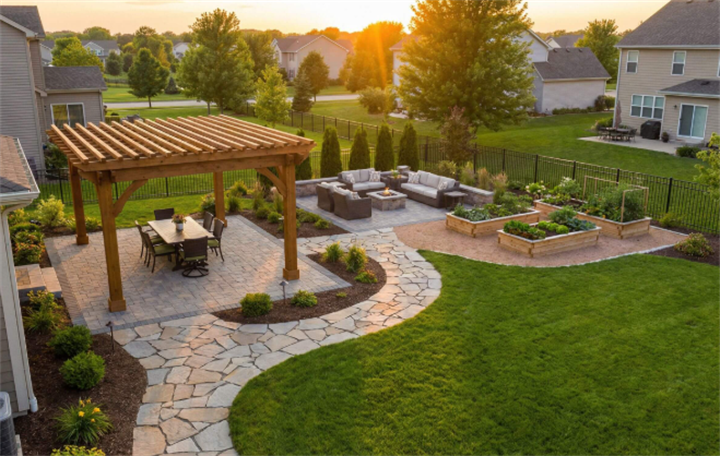
In a Backyard Under 1,000 Square Feet, Create Three Separate Zones for Different Ages