Published: July 29, 2026|⏱️12 minutes
By Tommy "The Tally" Kowalski
Building an outdoor kitchen? The exterior wall finish can blow your budget faster than you think. Same square footage, but smooth stucco and exposed-aggregate wash – the price can triple. And vague bid descriptions? They’re a goldmine for hidden add-ons.
I’ve spent years auditing real project costs across the Midwest. This guide breaks down labor, materials, and those sneaky extras so you know exactly what to expect before you sign anything.
First, Let’s Translate Contractor Jargon
Around here, “stucco” can mean three totally different things. Prices vary by a factor of three. If you don’t know the lingo, you might pay for a premium finish and get a cheap knockoff.
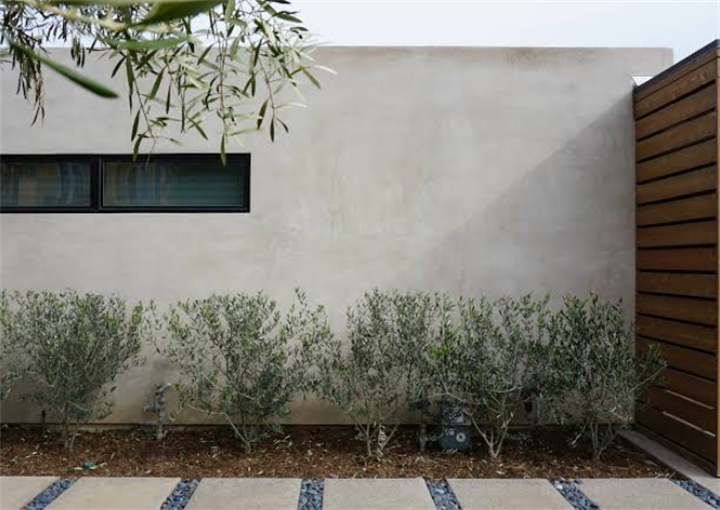
Smooth trowel stucco is the traditional three-coat system – scratch, brown, and finish coats, hand-troweled to a flat surface. Want a mirror-smooth look? That’s top-tier labor.
Washed sand, or exposed aggregate, mixes natural pebbles or crushed stone with cement, then washes away the surface paste while it’s still green. It’s slow, fussy, and demands real skill.
Then there’s spray-on synthetic stone – a thin acrylic coating that some guys try to pass off as “stone finish.” It’s not. It’s about 2–3 mm thick and costs a fraction of the real deal.
Smooth Stucco – Where Bids Love to Hide Things
The biggest trap: cheap bids often leave out essential layers. I’ve seen “stucco finish at $5.50/sq ft” that didn’t include metal lath, water barrier, or expansion joints. Those get added later – at $1.80 for lath and $0.70 for paper – and suddenly you’re at $8.00.
From my job records (2019-2026), pure labor for a quality three-coat smooth finish rarely goes below $3.50/sq ft. For a glass-smooth trowel job, expect $5.00–$6.50.
HomeAdvisor’s 2025 True Cost Guide puts full installed cost (materials + labor) at about $7–$9/sq ft on average, with complex projects hitting $12. That lines up with what I see in the field.
A 2025 Wisconsin project I tracked came in at $9.80/sq ft – all included. But I audited 15 Midwest bids last year; every single one below $6/sq ft missed at least one critical line item.
Rule of thumb: If a “full-package” bid is under $6.50, ask point-blank: “Does that include metal lath, waterproof paper, corner beads, and expansion joints?” If they hesitate, walk.
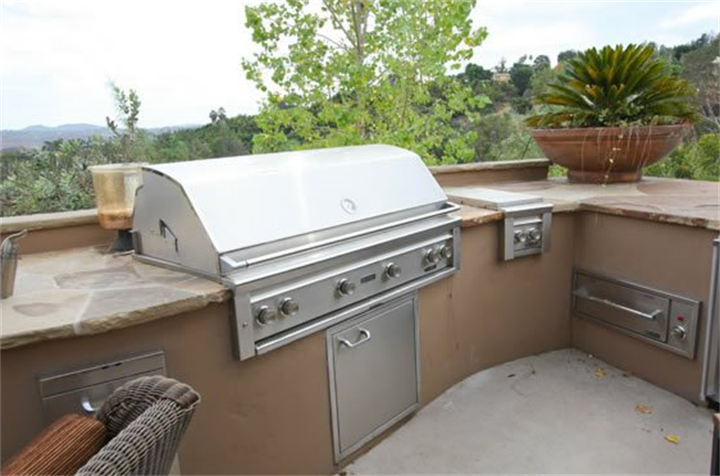
Built-in outdoor kitchen featuring smooth stucco surrounds and stainless steel built-in grill
Don’t Forget the Sealer
Unsealed smooth stucco soaks up grease like a sponge. I had a Detroit client whose grill wall turned into a greasy yellow mess after 18 months. The fix? $1,200 to strip and reseal.
A good silane sealer runs about $50–$80 per gallon, covering 200–300 sq ft. It’s not huge money, but if it’s not in the bid, you’ll pay for it later.
Exposed Aggregate – Beautiful, and Priced That Way
This finish doesn’t cut corners. The wash-off step alone – a skilled guy can only do 40–60 sq ft per day, compared to 150+ for smooth trowel. That’s 2–3× the labor.
In my 2024 Michigan lake-house projects, labor ran $9.00/sq ft on average. Aggregates themselves: $4–$7/sq ft depending on the stone. Total package? Never under $14, and custom blends hit $22.
Pick your pebbles carefully. I compared three options for a client: local gray gravel at $3.20, Mexican beach pebbles at $7.80, and black basalt imported at $12.00. The homeowner unknowingly picked the basalt, and his wall went from $16 to $23/sq ft – ouch.
Always ask for a cap on aggregate upgrades in the contract.
Resin-Based Systems – Tempting, But Risky
At a 2026 Chicago trade show, a supplier pitched a two-part resin aggregate that needs no washing – materials about $4.50/sq ft. Sounds great. But a pilot job I followed in Indiana bubbled and delaminated after one wet spring. Repairs meant cutting out and redoing sections.
Until there’s solid long-term data, I wouldn’t put resin anywhere near a grill or grease zone. Your money shouldn’t be their test case.
Spray-On Stone Texture – The Impostor
This is the cheap cousin. Labor around $2–$3/sq ft, all-in $4.50–$6.50. Looks okay from 20 feet, but up close it’s flat, thin, and dents easily.
One homeowner signed for “water-washed stone” and got spray-on – because his contract didn’t say “hand-applied, washed to expose aggregate, minimum 3/8” thick.” Words matter. Put every detail in writing.
By the Numbers – Side-by-Side
Here are the ranges from my project logs (2019-2026, mostly Great Lakes region). These are actual settled invoices, not internet averages – but remember, prices vary by market.
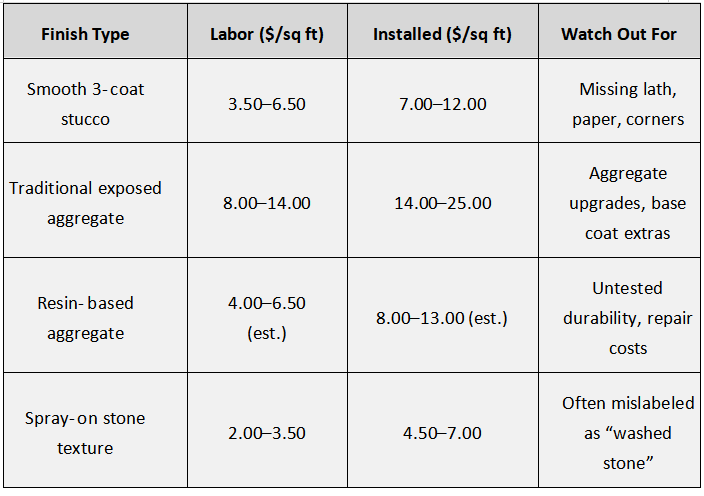
For a 200-sq-ft wall: smooth stucco at $9.50 avg = ~$1,900. Exposed aggregate at $18 avg = $3,600. That extra $1,700 buys you real stone depth, impact resistance, and breathability – not hidden fees.
Outdoor Kitchen – Walls Are Not Just Backdrops
Heat, grease, moisture, UV – they all attack. Sealed smooth stucco wipes clean easily, but it’s brittle. Thermal cycling from the grill can cause hairline cracks, and freeze-thaw does the rest.
Exposed aggregate handles heat better because the stone gaps give tiny relief points. But those same gaps trap dust and grease – you’ll need a pressure wash once a year, maybe $250–$350 for a pro.
I have two Illinois clients: one with sealed smooth stucco – three years, still looks new, just occasional wiping. Another with exposed aggregate near a lake – moss grows in the crevices, and he pays for annual cleaning. Neither is wrong; just know your maintenance budget.
My Punch List – What Must Be in Writing
Every item below needs to be spelled out in the contract. If it’s missing, it’s a future change order.
Lath & waterproofing – Must meet ASTM C1063. If left out, expect $1.50–$2.00 for lath and $0.60–$0.90 for paper (from my audit records).
Expansion joints – Required every 144 sq ft or 12 ft linearly (common ASTM practice). Add-on cost: ~$15–$30 per joint.
Corner beads & drip edges – Not optional. If omitted, figure $4–$7 per linear foot to add.
Aggregate cap – For washed finishes, lock in the base stone type and a maximum upcharge for upgrades.
Hauling & site access – Small backyards might add $300–$500 for hand-carting materials.
Sealer – Budget $0.50–$1.00/sq ft for silane sealer if not included.
A Word to DIYers
I respect the hustle, but exposed aggregate isn’t a “take your time” job. Cement sets fast – miss your wash-off window, and you’ll get blotchy, white-stained patches.
A Wisconsin homeowner tried it over a weekend, botched half the wall, and paid $1,800 to have it all torn off and redone. Your time has value – and pros have the rhythm.
FAQs
Can I clean grease off smooth stucco?
Only if it’s sealed. Unsealed, it stains permanently. Sealed, mild detergent works. Sealer costs ~$50–$80/gal for 200-300 sq ft.
Is exposed aggregate safe near a grill?
Cement-based ones handle heat fine, but grease gets into the crevices. Add a stainless backsplash behind the grill to save yourself headaches. Resin systems? Keep them away from heat – no long-term data.
Why is my small project so much more per sq ft?
Fixed costs – travel, minimum materials, setup – get spread over fewer square feet. A 30-50% bump is normal as long as it’s itemized.
How do I spot a bad bid?
Ask for a four-line breakdown: Labor / Materials / Accessories / Overhead & Delivery. If they can’t or won’t, they’re leaving room to add stuff later.
Disclaimer
All cost figures come from Tommy’s internal project logs (2019-2026) and public data like HomeAdvisor’s 2025 guide. They are for reference only – actual prices depend on your region, season, and site conditions. Always get written quotes from licensed local contractors and read every line of the contract.
References
[1] HomeAdvisor. (2025). How much does stucco installation cost? – public cost guide.
[2] Author’s internal estimating database, project logs, and audit records, 2019-2026 (unpublished).
About the author:
Tommy “The Tally” Kowalski
Having worked as a contractor estimator for fifteen years, now he does only one thing: exposing the tricks in the building materials quotations. He doesn't speak politely, but every word is aimed at saving you money. His creed is: "All those seemingly too-good-to-be-true unit prices actually hide hidden fees that are deliberately not written down."
Related Articles
Recommend:
Why Your Patio Feels Like a Hallway: Break the Linear Space with Diagonal Decking
Are Reclaimed Bricks Safe for Outdoor Fireplaces? Reuse, Testing, and Mortar Compatibility
The Frost Line Reality in Minnesota: Why Your Retaining Wall Needs a 48-Inch Gravel Base
The Vanishing "Room" in Open-Plan Homes: A Bug-Proof, Breezy Screened Dining Porch