Published: July 27, 2026|⏱️12 minutes
By Tommy "The Tally" Kowalski
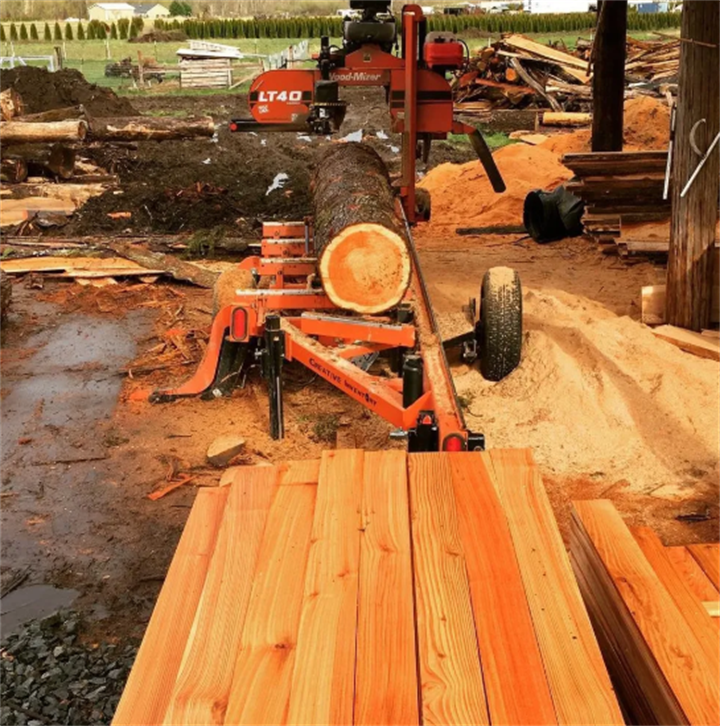
When you’re choosing materials for an outdoor planter, you’re really making a bet. A bet on how much you’ll spend today versus how much you’ll keep spending for the next ten years. Western red cedar has been the go-to choice for DIYers for decades. It’s natural, it’s beautiful, and it’s relatively cheap upfront. Weathering steel, on the other hand, promises a near-permanent structure with almost no maintenance. But most price tags you see only tell you the first chapter of the story. They quietly leave out the long-term costs of sealers, repairs, and full replacements.
Material Lifespan: The Lab Numbers Are Real, but They Won’t Write Your Checks
According to the USDA Forest Products Laboratory’s Wood Handbook (2021 edition, Chapter 14), western red cedar heartwood has a durability rating of “durable” when in contact with the ground. Its expected service life typically falls between 10 and 15 years. That range comes from decades of field exposure tests across North America.
For weathering steel, two sources give us the picture. The first is ASTM A606/A606M-19, which sets the composition and performance requirements for high-strength, low-alloy steel with improved atmospheric corrosion resistance. The standard itself doesn’t spell out how many years a planter will last. The second source fills in that gap. A 2018 review paper published in Corrosion Science by Morcillo and colleagues summarized long-term exposure data from multiple sites around the world. They found that once the protective patina forms, the steady-state corrosion rate drops to about 0.01 to 0.02 millimeters per year in rural or urban atmospheres. If your planter uses 1.5-millimeter-thick sheet steel, the theoretical penetration time stretches well beyond 50 years, and conservatively beyond 70. I need to be honest here: that 70-year figure is my own linear extrapolation from the corrosion rate data. Real-world life can be shorter depending on crevice corrosion and local conditions.
I’ve seen too many people grab these numbers and jump straight to “the steel planter is worth it.” They miss what really matters to an estimator like me: the timing of every cash outflow. The true cost of a planter isn’t the check you write on day one. It’s every spring afternoon you spend bent over a can of wood oil, peeling twenties out of your wallet. What follows is a year-by-year cash-flow breakdown. The numbers are a mix of my own project records going back fifteen years and fresh quotes I pulled in July 2026 from four suppliers. All figures are in U.S. dollars and reflect what I’m seeing in the Northeast. Your local market may differ, so treat these as a baseline, not a prophecy.
The 10-Year Cash-Flow Breakdown: Exactly When Your Money Leaves You
I’m basing this on a medium planter: 48 inches long, 16 inches wide, 16 inches tall. That’s roughly 1.2 by 0.4 by 0.4 meters. It holds a decent amount of soil and happens to be the size I’ve specified most often for residential projects. It’s just big enough to expose every cost trap both materials can spring on you.
Option A: DIY Western Red Cedar Planter
Year one: your wallet gets a break.
If you build it yourself, your upfront material cost will land somewhere between $100 and $150. I’m using a midpoint of $125. I pulled this range from bids I did for three clients in May 2026, and I double-checked it in July against online listings. On Home Depot’s website, kiln-dried western red cedar decking boards—1×6 inches, clear grade—were selling for about $25 to $28 per 8-foot board. That works out to roughly $3.20 to $3.50 per linear foot. Add a box of outdoor-grade stainless steel screws and a tube of waterproof wood glue, and you’re looking at $120 to $130 in materials. I have to be upfront: lumber prices swing hard, and I’m capturing a snapshot. But that snapshot is low enough to make the cedar option feel like an obvious win. That feeling is exactly what the price tag wants you to stop at.
The maintenance clock starts ticking immediately.
Back in 2009, I made a mistake I can still feel in my fingers. I built my first cedar planter and skipped the oil that first year. I figured, hey, it’s naturally rot-resistant. Two years later, hairline cracks started spreading across the bottom boards. By the third spring, I pressed my thumb into one of those cracks and the wood gave way like wet cardboard. Cedar heartwood resists rot, but it does not resist moisture cycling. Without a protective oil, the surface grays, cracks, and soaks up water. The rot clock speeds up by at least a third, based on what I’ve observed across dozens of client planters since.
If you want that ten-year lifespan, you need to apply a penetrating oil once every spring. That’s the bare minimum.
Over ten years, you’ll do this seven or eight times. I checked prices in July 2026 on the Home Depot and Lowe’s websites for two widely used products: Penofin penetrating oil and Cabot Australian Timber Oil. One-gallon cans were running between $50 and $60. I’m using $55. The manufacturers claim a coverage of 150 to 200 square feet per gallon for a two-coat application, so I’ll split the difference at 175 square feet. The total surface area of our planter—inside and out—is about 38 square feet. Each annual two-coat session uses roughly $55 × (38 ÷ 175) = $12 in oil. Seven sessions give you roughly $84 in maintenance materials over ten years. That doesn’t include the two brushes you’ll wreck trying to get into the corners, or the pair of work gloves you’ll never get clean.
The mid-life repair hits your bottom boards.
The floor of the planter sits in constant contact with damp soil. Even cedar heartwood will start to soften there. In my project records, about six out of ten cedar planters need a bottom board replacement and some lower sidewall repair sometime between year five and year seven. This isn’t lab data; it’s my own tally from site visits. The cost of a few feet of replacement cedar stock, corner braces, and shipping has run between $35 and $50 on the last two repair receipts I’ve seen. I’m using $45 as the average.
The end of year ten: more than wood goes to the dump.
By the tenth spring, I’d bet—based entirely on what my own eyes have seen, not on a study—that your planter is structurally loose. Screw holes are wallowed out. Boards have cupped and pulled away. You could squeeze one more season out of it, but functionally it’s dead. Total ten-year cost: $125 + $84 + $45 = $254. At the end of the decade, you have a frame that’s ready for the dump, and you’re staring at another $254 to do it all over again. I’m assuming the replacement costs the same in today’s dollars, though in reality lumber and oil prices will almost certainly be higher by then.
Option B: Weathering Steel Planter
Year one: it stings.
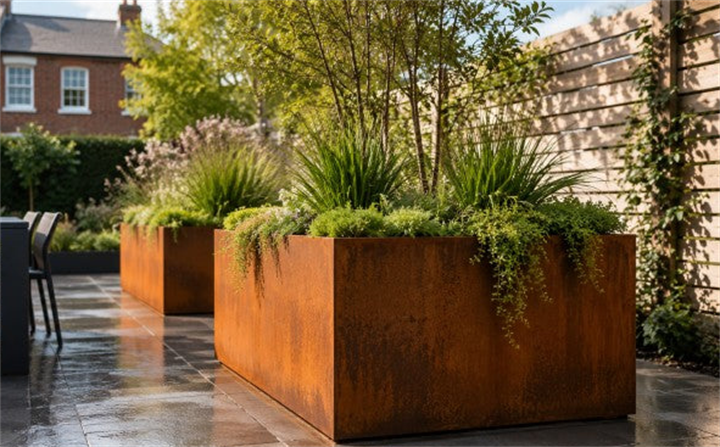
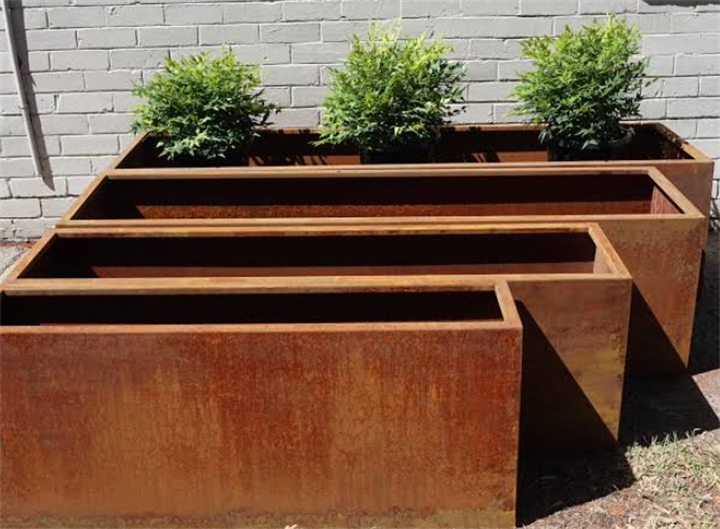
You can’t really build a weathering steel planter from scratch in your garage. You need industrial shearing and bending equipment. So you buy it pre-fabricated. In July 2026, I got written quotes from three small metal fabricators in the Northeast. For a planter made of 1.5-millimeter-thick ASTM A606 Type 4 steel, laser-cut, bent, welded, and delivered with a pre-rusted or raw patina and a removable drainage floor, the prices clustered between $290 and $370. I’m using $330 as my midpoint.
A lot of people see that number and walk away. What they don’t see is that the price already includes almost all of the next two decades of ownership.
Maintenance barely exists.
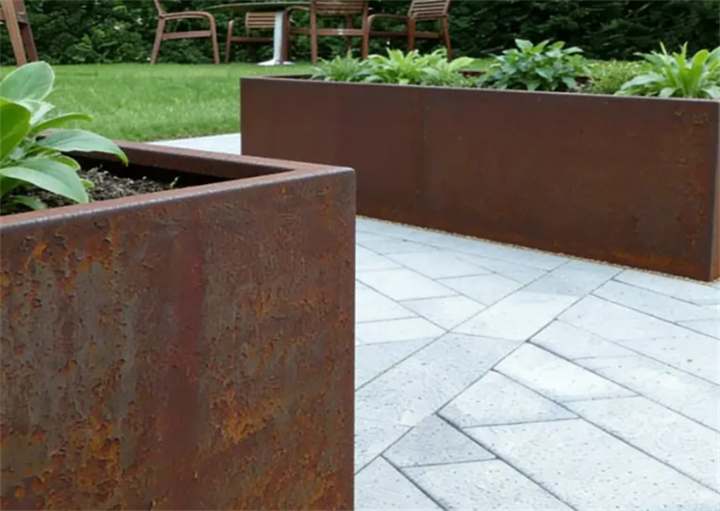
Once the protective rust layer stabilizes—that takes anywhere from six months to two years, depending on your wet-dry cycles—your only job is to hose off dust and mud every couple of years. I installed six of these planters for a client in 2015. According to my own follow-up notes, I’ve rinsed them exactly three times. The cost was tap water. If the surface gets scratched and exposes raw steel, you can spray on a rust converter to speed up the re-patination. On Amazon right now, products like Sta-Bil Rust Stopper sell for about $11 to $13 for a 12-ounce bottle. I’m using $12. Over ten years, you might use one bottle. You might use none, because scratches re-rust on their own in a few weeks. I’m capping the **ten-year maintenance budget at $15**. That covers one bottle and a pair of rubber gloves.
Year ten: it’s still a teenager.
After a decade, the planter’s surface is darker and richer, like a piece of landscape sculpture. Structurally, it’s untouched. Going by that corrosion-rate extrapolation, it has at least 15 to 25 years of life left. Total ten-year cost: $330 + $15 = $345.
At face value, cedar looks like the winner: $254 versus $345. A $91 difference in cedar’s favor. This is the nastiest trick hidden costs ever pull on you. You feel clever at the ten-year finish line, but you’ve completely forgotten that the next decade is waiting right behind it.
The Replacement Cost: The Monster Every Quote Leaves Out
I never analyze a project over just ten years. I run the numbers out to twenty. That’s the minimum for a real lifecycle cost picture.
With cedar, you reset at year ten. Another $254 in materials, oil, and mid-life repair. Twenty-year total: $508.
With weathering steel, after spending $345 in the first decade, your second decade asks for almost nothing. Another round of occasional rinsing, maybe one more $12 bottle. I’m estimating no more than $20 in additional costs. Twenty-year total: $365.
Do you see what happens? The cedar line stays flat and friendly for ten years, then spikes upward like a fishhook in your budget. The steel line goes nearly flat after year ten and barely climbs. I first saw this in real life back in 2012, when a community garden hired me to review their planter costs. They had twelve cedar boxes. Years one through five were pure bliss. Years six through eight, every spring someone grumbled about replacing another rotten board. By year eight, they sat down and ran the numbers. They realized that if they had spent roughly 60% more up front on weathering steel, they would have been net saving money since year seven.
How to Read the Hidden Fees on Your Quotes
After fifteen years of wrestling with building-material salespeople, I’ve learned the two most common traps for each material.
The cedar DIY trap: the bundled oil upsell.
If you find a lumber supplier with a suspiciously low board price, watch their next move. They’ll push a “specially formulated” wood oil that you absolutely must buy to protect your investment. I’ve tested at least six different brands of penetrating oil over the years and talked with coatings chemists. This is almost always a margin grab. Any outdoor-rated, penetrating oil with mildew inhibitors will do the job. Buy your boards wherever you want. Buy your oil separately, from a brand you’ve researched, not from the person who just sold you the wood.
The weathering steel trap: stripping the price down to bare metal.
Some fabricators define “planter” very narrowly. That $290 base price you see? It might not include the drainage floor. It might not include a drip tray to keep rust water off your patio. It might not include the rigid insulation liner that keeps plant roots from cooking against hot steel in August. Add all of those “required options,” and your $290 planter can jump past $420 before you blink. Here’s the rule I give every client: ask for the “fully loaded, delivered-to-your-yard” price. Get it in writing that the quote includes a standard drainage floor, at least half an inch of thermal insulation liner, and a basic ground-protection recommendation. If they hesitate, find a different shop.
The Things Money Can’t Measure, but You Still Need to Weigh
My job is to show you the numbers. But a few things sit outside a spreadsheet, and I’ve seen them matter just as much.
Time. Building a cedar planter from scratch—cutting, assembling, and applying the first coat of oil—takes a skilled DIYer about 7 to 9 hours. I’ve tracked this with multiple clients and friends. After that, each spring’s maintenance eats up at least half a day: cleaning, masking, brushing. Over ten years, that’s about 60 to 70 hours. A weathering steel planter takes 30 to 40 minutes to unbox, bolt together, and drop in the liner. Total cleaning time over ten years barely hits two hours. If you value your weekends at even $15 an hour—the minimum wage in several states—the cedar option tacks on over $900 in hidden labor. That’s almost three times the upfront price difference.
Weight and mobility. Before you fill it with soil, a cedar planter weighs around 35 pounds. A steel one of the same size, made from 1.5-millimeter sheet, weighs roughly 99 pounds. You can carry the cedar box across the yard in the fall. You can move it into the garage for the winter. The steel planter lands once and stays. I’ve had renting clients leave their steel planters behind when they moved because moving them wasn’t worth the hassle. That’s a lost asset on top of the security deposit.
Root environment. Wood breathes and buffers moisture naturally, but it competes with roots for water. Steel can get scorching hot in direct sun. I’ve pointed an infrared thermometer at a dark rusted panel on a summer afternoon and seen readings above 140°F. That’s hot enough to damage fine roots. Both planters need an insulation liner or root barrier, and that cost is already in my estimates. Just adjust your watering habits and keep an eye on things in July.
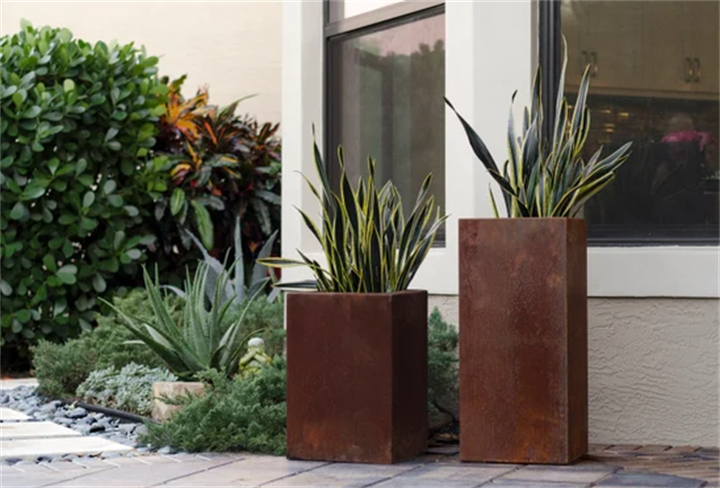
Aesthetics. Cedar starts out warm honey and weathers to silver-gray in about two years. Weathering steel evolves through deep rust-orange to a darker purplish-brown over a full decade. Neither is better. But remember: you’ll be looking at this thing every day for the next ten years. Pick the one that will still make you happy when the calendar turns.
The Final Verdict
Choose the DIY cedar planter if your cash-on-hand right now is tight and $125 is genuinely your hard ceiling. Or if you’re pretty sure you’ll move or redesign your outdoor space within a decade and don’t want to haul a hundred-pound steel box to the next place. And if the thought of spending a quiet spring morning with a brush and a can of oil sounds like therapy, not a chore—go for it. It fits your window, and the hands-on satisfaction is real.
Choose the weathering steel planter if you are done with anything labeled “annual maintenance.” If you can afford the higher buy-in and you want to buy back your next eleven springs. If your yard feels like home for the long haul and you want the things you put in it to age gracefully without your constant attention. That extra $91 buys you a decade of quiet Sundays.
I’ve put every dollar on the table. Not a single line item is hidden. Now you just have to answer one question: Do you want to save money today, or do you want the version of you ten years from now to look back and say thank you?
FAQs
Q: Will rust water from a weathering steel planter ruin my patio stones?
A: Yes, especially during the first year or two. In my project records, rust runoff has permanently stained light-colored stone and concrete. The fix is simple: put a precast concrete paver or a galvanized drip tray under the planter. It costs around $10 to $15. I already factored that into the $15 maintenance budget.
Q: If I skip the oil on my cedar planter, don’t I save money?
A: You might save $84 in oil, but based on every case I’ve tracked, you’ll shorten the planter’s life to 6–8 years. That means you could face two replacements in a single decade, pushing your total cost close to $400. The dollars you save by ignoring maintenance always come back for you, and they come back with interest.
Q: Can I just use pressure-treated pine instead?
A: You can. The upfront cost drops to maybe $70–$80. But pressure-treated pine is rougher, often warps faster, and rarely lasts beyond 8 years in ground contact. My estimate for a ten-year pine planter runs around $160–$200. It’s a bit cheaper than cedar, but the look and feel are different. It works if you genuinely only need three to five years out of it.
Q: Will a weathering steel planter cook my plants in summer?
A: It can. In direct sun, the inner wall of a dark rusted planter can exceed 140°F. Make absolutely sure your planter includes a rigid insulation liner, and keep the soil consistently moist. If you’re buying a bare box without a liner, add the cost of XPS foam board to your budget before you order.
Disclaimer
All cost estimates are based on the author’s purchasing experience in the Northeastern United States and on written or online quotes obtained from four suppliers in July 2026. Lumber, steel, and coatings are commodity products subject to frequent price swings. Actual prices in your region and at your time of purchase may differ substantially. Material service life figures are drawn from peer-reviewed, publicly available data, but real-world durability depends on installation quality, microclimate, and use intensity. The penetration-time extrapolation from corrosion rate data is a simplified linear estimate and does not represent a guaranteed engineering lifespan. This article is for informational purposes only and does not constitute procurement or investment advice. The author has no financial relationship with any of the brands or retailers mentioned.
References
[1] ASTM International. (2019). Standard Specification for Steel, Sheet and Strip, High-Strength, Low-Alloy, Hot-Rolled and Cold-Rolled, with Improved Atmospheric Corrosion Resistance (ASTM A606/A606M-19). ASTM International.
[2] Dell’Isola, A. J. (2002). Life Cycle Costing for Facilities. Reed Construction Data.
[3] Morcillo, M., Díaz, I., & Chico, B. (2018). Atmospheric corrosion of weathering steels. Overview for engineers. Corrosion Science, 141, 62–80.
[4] USDA Forest Products Laboratory. (2021). Wood Handbook—Wood as an Engineering Material (General Technical Report FPL-GTR-282). Chapter 14: Wood Durability and Protection.
Recommend:
The Frost Line Reality in Minnesota: Why Your Retaining Wall Needs a 48-Inch Gravel Base
The Real Cost of a Brazilian Teak Deck: 25-Year Maintenance vs. Composite Replacement Cycles
Phoenix Courtyard Design for Extreme Heat: How Adobe and Rammed Earth Walls Stay Cooler
Are Reclaimed Bricks Safe for Outdoor Fireplaces? Reuse, Testing, and Mortar Compatibility